Estimated reading time: 20 minutes
This post was largely inspired by Gerard Shannon’s excellent recent biography of Rory O’Connor.
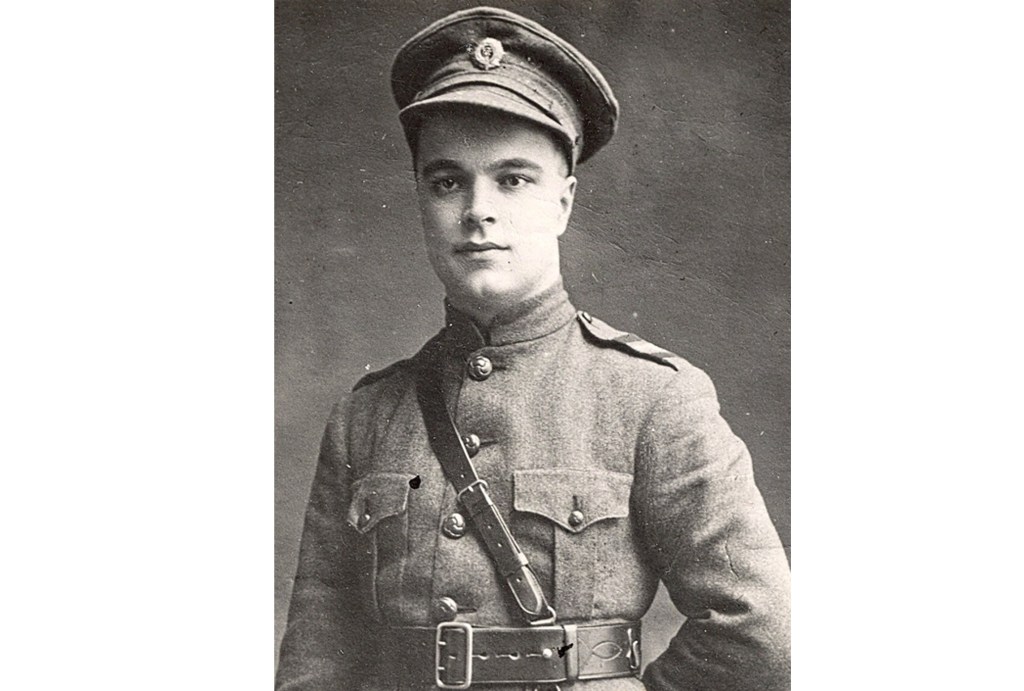
Joe McKelvey left Belfast for the last time in the middle of March 1922. But to understand the reasons for his departure, it is necessary to rewind the clock to the signing of the Treaty in the small hours of 6 December 1921.
Accepting the Treaty
Under cover of a céilí held in Clones later that night, Eoin O’Duffy, who had been the IRA’s Truce Liaison Officer for the north, met the O/Cs of most of its Northern Divisions: McKelvey of the 3rd, Charlie Daly of the 2nd, Frank Aiken of the 4th, Dan Hogan of the 5th and Seán MacEoin of the 1st Midlands Division, whose area of operations included Fermanagh. According to Aiken:
“O’Duffy assured us, with great vehemence, that the signing of the Treaty was only a trick; that he would never take that oath and that no one would [be] asked to take it. He told us that it had been signed with the approval of GHQ in order to get arms to continue the fight.”1
McKelvey was accompanied to Clones by his Adjutant, Séamus Woods, and Quartermaster, Tom McNally, although they did not attend the meeting with O’Duffy. McNally recalled:
“Joe was pro-Treaty just at the time the Treaty was signed … [He] came out of the meeting saying even the Falls Road can vote itself out. (He must have been told that any majority unit in Ulster would have the right to vote itself out of the northern government.) He told us that all our areas could vote themselves out so there would be little left of the northern government, and as a result they would have to come in with the rest of Ireland.”2
A few days before Christmas 1921, Denis McCullough, the veteran Belfast republican, was released from internment. Almost immediately, McKelvey sought a meeting with him to discuss the Treaty. As well as McKelvey and Woods, Frank Crummey, the division’s Intelligence Officer, also went to McCullough’s house, although McNally was not present. After an intense discussion lasting from 8pm until midnight, they adjourned the meeting until the following night when, as McCullough said:
“I asked each man to state his final views … Joe McKelvey gave it as his firm opinion that ‘we could not stand up against open and unrestricted war for even two months,’ though he thought that the 3rd Northern Division was one of the best armed divisions in Ireland. Séamus Woods … was of the opinion that six months of the Truce had seriously impaired the morale of the IRA [in other divisions] and he feared that a return to war conditions would find the men much below pre-Truce standard. Frank Crummey stated that the civilian population had taken the Truce to mean the end of activities and he could not visualise the people again presenting that solidarity of support which had been the secret of our success in the past.
I now put to them the question which had been troubling my own mind – can you visualise any alternative to acceptance of the Treaty? Here we were in complete agreement – we could not suggest an alternative which held out any hope. I thereupon advised that we should make our attitude known to GHQ, at the same time requiring certain assurances in regard to the IRA in the six northern partitioned counties.”3
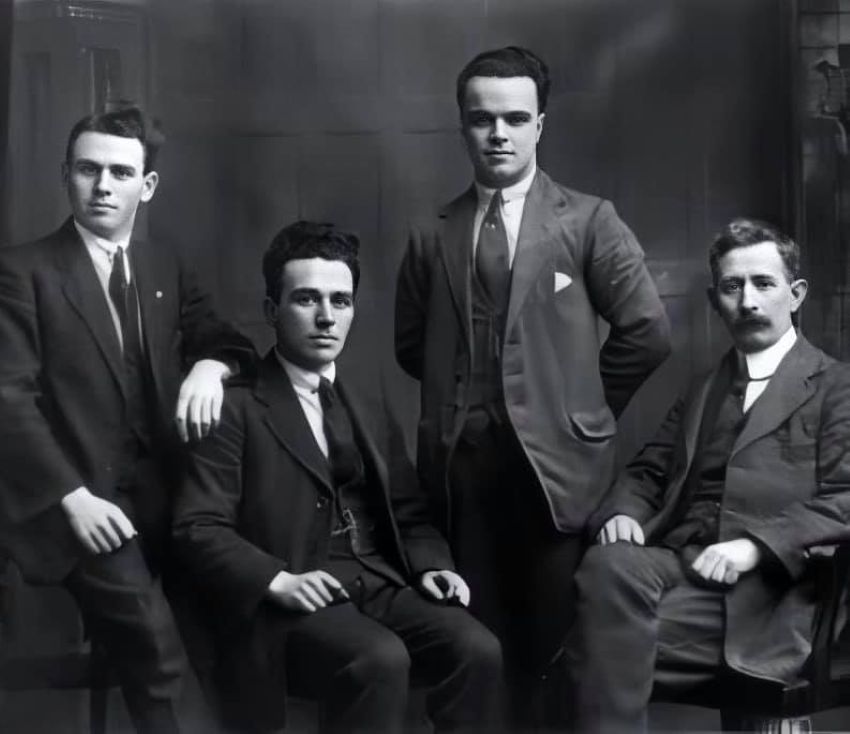
Divisional Staff of 3rd Northern Division (L-R): Séamus Woods, Adjutant; Tom McNally, Quartermaster; Joe McKelvey, O/C; Frank Crummey, Intelligence Officer; they unanimously accepted the Treaty
On St Stephen’s Night, 26 December, McKelvey and McCullough met Michael Collins and Arthur Griffith at the Gresham Hotel in Dublin. They set out the conditions under which they were prepared to accept the Treaty: these acknowledged that partition had already come into effect, but sought to minimise its discriminatory impact on the northern Catholic minority and sought determined efforts by the Dublin government to end it:
“1. Securing guarantees that no further concessions, financial or statutory, be given to the Ulster parliament to enable them to entrench themselves and so stereotype partition.
2. Minority safeguards. Redistribution of seats [in the Parliament of Northern Ireland] in order to secure some measure of just representation in proportion to population.
3. To procure from the Government of Ireland a direction as to the policy – both civil and military – to be pursued by our people in N.E. Ulster.
4. To define the relations – both civil and military – between our people in N.E. Ulster and the Irish government in order to secure a community of mind and effort.
5. To decide as to whether the economic pressure against N.E. Ulster be maintained until they adopt a correct attitude towards Ireland, and to decide definitely its purpose.
6. To obtain an opinion as to what attitude N.E. Ulster nationalists should adopt towards the N.E. Ulster parliament – whether abstention or otherwise, etc. and what is to be the logical outcome and conclusion of the refusal of public bodies in its area to submit to its jurisdiction.”4
According to McCullough, “Michael Collins said he considered our requirements fair, and assured us that there would be no question that what we required could be conceded and assured.”5
McKelvey returned to Belfast, where he was pictured greeting Charlie Ryan, who had been sentenced to 15 years in prison for a grenade attack on a British military sentry but was among the IRA prisoners released under a general amnesty introduced following the signing of the Treaty.
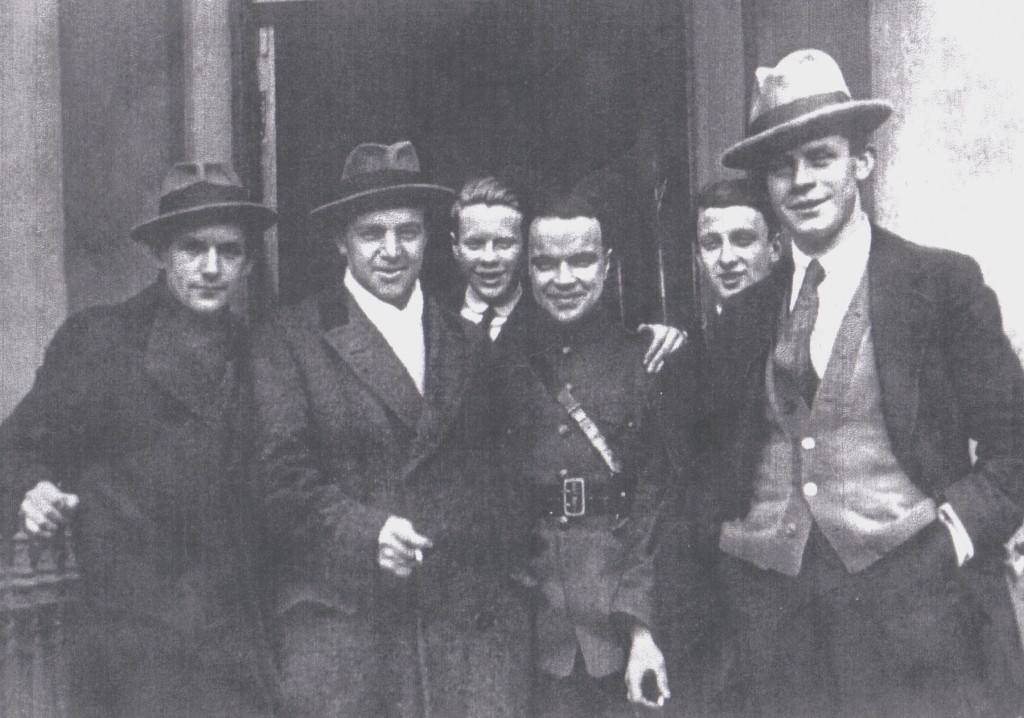
McKelvey (centre) greets Charlie Ryan (extreme right) on his release from prison after the signing of the Treaty
McKelvey went back to Dublin when the Treaty debate resumed in the Dáil after Christmas. The O/C of the Belfast Brigade, Roger McCorley, later said,
“Once he phoned me about the terms of the Treaty debates. ‘The Treaty has been rejected by three votes … Three days’ notice was to be given of the termination of the Truce.’ Then he came up again later to say that his idea of the voting was wrong. (It appeared to be that these men … were not very particular whether the Treaty was agreed or not.)”6
Although the leadership of the 3rd Northern Division had grudgingly decided to accept the Treaty, some republicans in Belfast were very particular about it not being agreed.
Among McCullough’s papers in the National Library of Ireland is a document which appears to be an early draft of one of the statements he gave to the Bureau of Military History (BMH) in the 1950s – the texts are identical in many respects. However, there is a passage at the end of this document which does not appear in his BMH statement:
“Incidentally, during the second night of our talks, one of the earliest members of the Volunteers, Dan Turley … came to my house with a message from a meeting of IRA men in session in an old drill hut near my house, demanding that I go down and give them a lead. When I asked in what matter they wanted a lead, he informed me that they wanted a lead against ‘this Treaty.’ I informed him that the only men entitled to give a lead, as they had led the fight competently up to then, were inside discussing the matter; that I would inform them of his message and be guided by their decision.”7
This is significant as it demonstrates that in Belfast, a potential rupture over the Treaty was already emerging before the Dáil debate had even concluded.
On 7 January 1922, the Dáil voted by 64 versus 57 to ratify the Treaty. Éamon de Valera was replaced as President of the Dáil by Griffith, while former IRA Chief of Staff, Richard Mulcahy, became the new Minister of Defence and he, in turn, was replaced as Chief of Staff by O’Duffy.
The IRA splits
Just over a fortnight after signalling to Collins and Griffith his acceptance of the Treaty and only four days after its ratification by the Dáil, McKelvey changed his mind and firmly aligned himself with IRA opponents of the Treaty.
Their view was that the Treaty disestablished the Republic proclaimed at Easter 1916 and declared by the First Dáil in 1919; by accepting the Treaty, the members of the Second Dáil had therefore broken the oath that both they and the IRA had sworn to support and defend the Republic. On 11 January, a letter was sent to Mulcahy requesting that an Army Convention be held, at which the following motion would be voted on, withdrawing the IRA’s allegiance to the Dáil:
“That the Army re-affirms its allegiance to the Irish Republic.
That it shall be retained as the Army of the Irish Republic, under an Executive appointed by the Convention.
That the Army shall be under the supreme control of such Executive, which shall draft a Constitution for submission to a subsequent Convention.”8
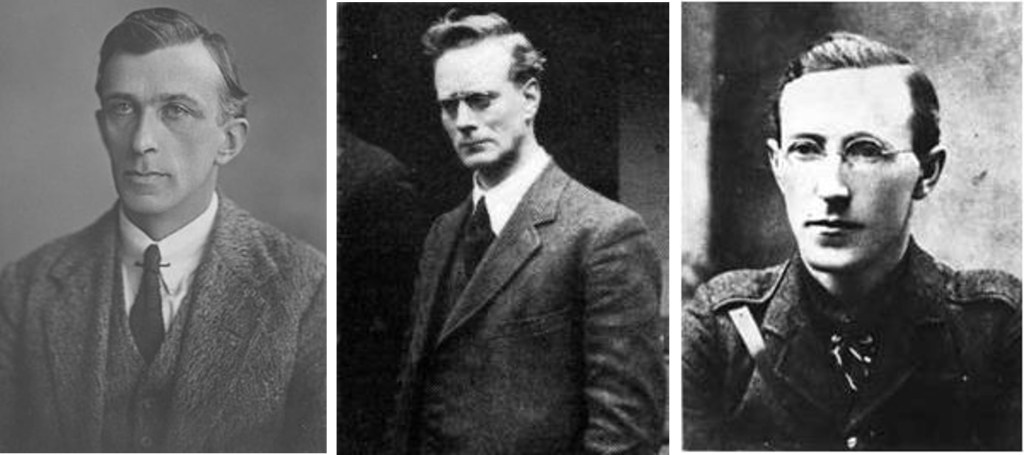
Some signatories of the letter calling for an IRA Army Convention (L-R): Rory O’Connor, Director of Engineering; Liam Mellows, Director of Purchases; Liam Lynch, O/C 1st Southern Division
The letter was signed by four members of the GHQ Staff (including Rory O’Connor and Liam Mellows) and the O/Cs of five divisions (including Liam Lynch of the 1st Southern Division) and both Dublin Brigades. The letter does not include McKelvey as a signatory, but notes that “the O/C 2nd Southern Division [Ernie O’Malley] is in agreement with the policy outlined herein, but his signature will not be available for some hours. It is understood that other Divisional Commandants are also in agreement.” Florence O’Donoghue, Lynch’s Intelligence Officer, later included McKelvey and O’Malley in his list of “senior officers sponsoring these views.”9
On 24 February, keen to avoid a split in the IRA, Mulcahy agreed to proceed with the holding of the Convention on 26 March. However, on 16 March, the Dáil Cabinet decided to ban the Convention and instructed O’Duffy that anyone attending it was to be considered as being suspended from the IRA.10
The following day, the senior anti-Treaty IRA officers met in Dublin and determined to press ahead with the Convention as planned. O’Malley noted that the attendance at that meeting included “a newcomer, a small, dark-complexioned, brown-eyed officer, Joe McKelvey, commander of the Belfast Division.” This suggests that McKelvey had not attended previous meetings of the anti-Treaty faction, instead staying in contact with them by phone or letter since January, while remaining in Belfast.11
He had succeeded O’Duffy as the IRA’s Truce Liaison Officer for Ulster when the latter was appointed Chief of Staff; he also inherited O’Duffy’s office and files in St Mary’s Hall in Bank Street. But while McKelvey was at the 17 March meeting in Dublin, disaster struck the 3rd Northern.
St Mary’s Hall was searched by Special Constabulary on 18 March. According to McCorley, “On one evening we decided that the guard was not necessary and left the premises vacant that night. The following morning, we found that the place had been occupied.” Significant numbers of files relating to the 3rd Northern were seized, including lists with the names of officers and men who had attended IRA training camps.12
McKelvey was blamed for the security blunder, as Woods later reported:
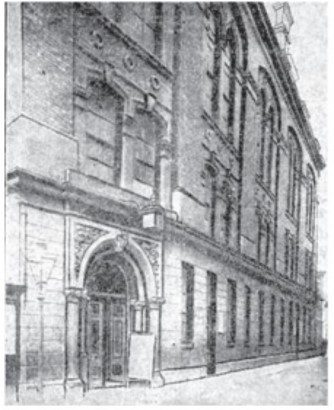
St Mary’s Hall, raided by Specials on 18 March 1922
“… all the Divisional and many Brigade officers demanded an inquiry into the circumstances of the raid and were asking the Divisional Commandant to resign. A meeting was to have been held on Friday 24th March [but] the enquiry was postponed till the following Thursday 30th March … The Divisional Commandant did not come back to the enquiry arranged for the 30th March. At a Divisional Council meeting held on Sunday 9th April, at which the officers of the Divisional Staff and the Brigade Commandants were present, I was elected Divisional Commandant.”13
At this point, Woods was no longer in Belfast: on 1 February he had been appointed as O’Duffy’s Deputy Chief of Staff and had taken up his new role based at Beggars Bush Barracks in Dublin, headquarters of the just-formed National (or Free State) Army.14
After the Divisional Council meeting, a statement in the 18 May edition of An tÓglach, the in-house publication of the pro-Treaty National Army, said that McKelvey was “repudiated” by all his divisional officers and by the O/Cs and staffs of the three brigades which made up the 3rd Northern. The basis for this repudiation was stated to have been McKelvey’s attendance at the banned Convention. Although they had also attended the Convention, neither McCorley nor Tom Fitzpatrick, O/C of the Antrim Brigade, were similarly repudiated.15
Despite being banned, the Convention went ahead, two days after the killings of the McMahon family. An interim Executive was elected but at a subsequent Convention held on 9 April, it was replaced by a new Executive of sixteen members, of whom McKelvey secured the fourth-highest number of votes.16
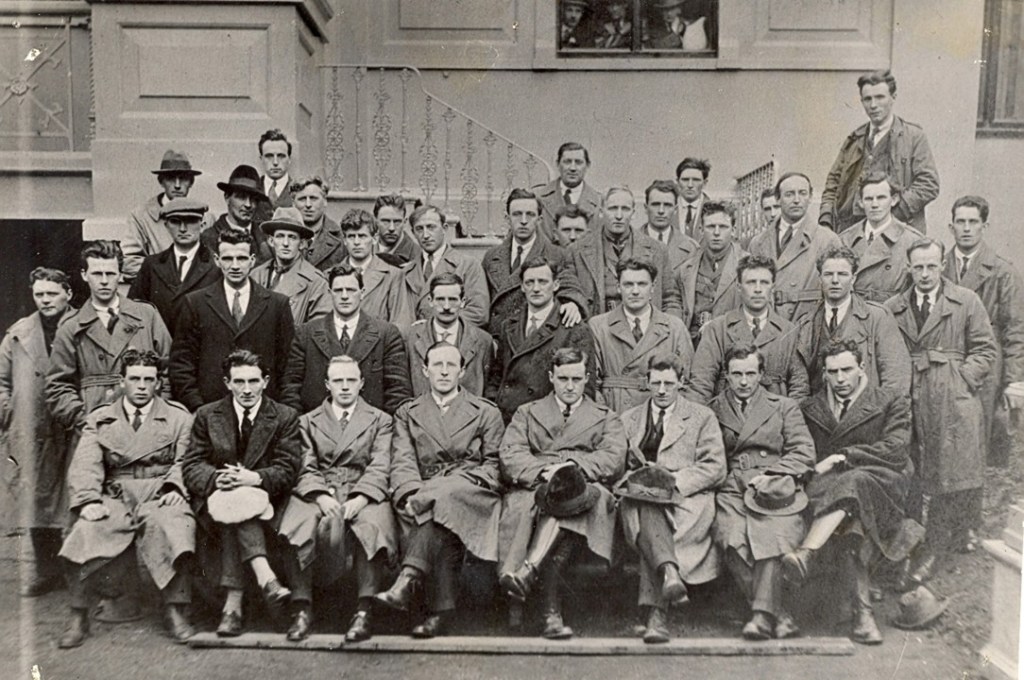
Some of the attendees at the second Army Convention, 9 April 1922, at which McKelvey was elected to the IRA’s Executive
The Executive elected Lynch as its Chief of Staff. He then appointed McKelvey as Deputy Chief of Staff and they were joined on a new IRA Army Council by O’Connor, Mellows and possibly also O’Malley, Seamus Robinson from Tipperary (though born in Belfast) and Peadar O’Donnell from Donegal.17
Four days later, the Executive occupied the Four Courts complex in Dublin. Symbolically, in the context of the Pogrom, they also occupied Fowler Hall, the Dublin headquarters of the Orange Order, and put it to use as accommodation for refugees fleeing Belfast.
In the Four Courts, McKelvey, along with O’Malley and Paddy O’Brien, the garrison commander, inspected the new headquarters. They selected sniper positions from which the buildings could be defended, arranged for practice attacks to test their defences and noted what additional materials were needed to bolster those defences – barbed wire, sandbags and so on. In addition,
“We needed a way of escape if we were suddenly surrounded. The sewer system underneath might be investigated: a tunnel could be sunk and driven out in two or three different directions into the side streets. There were many recommendations to be made. We made a thorough inspection of the position and drew up a report which we forwarded to the Chief of Staff, but it was not acted on.”18
McKelvey’s elevation to the Executive was almost certainly what prompted the holding of the 3rd Northern Divisional Council on the same date as the second Convention. Following the first Convention, McCorley had persuaded most of the other 3rd Northern delegates to remain loyal to the pro-Treaty GHQ, on the basis of a promise of additional arms and ammunition made by O’Duffy. McKelvey and his former officers were now firmly entrenched in different camps.19
But while they were acting to replace McKelvey, he was acting to replace them. Pat Thornbury had succeeded Woods as Adjutant of the 3rd Northern when the latter was promoted to GHQ:
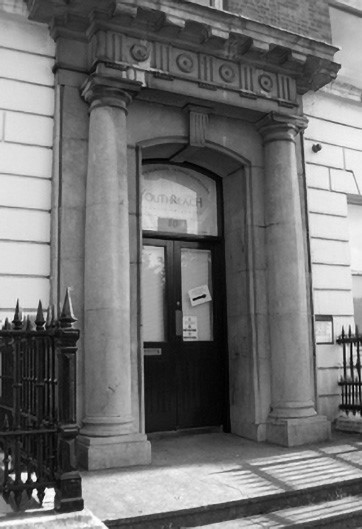
Fowler Hall, Dublin: occupied by the IRA Executive to house Belfast refugees
“Q: And at the time of the split you were appointed Divisional O/C?
A: No. I was Adjutant before the split.
Q: When Joe McKelvey left for the Four Courts you were appointed Divisional O/C?
A: I was.
Q: About April or May 1922?
A: Yes.”20
McKelvey then appointed Thornbury’s replacement as 3rd Northern Adjutant. In January 1920, Michael Carolan had achieved the unique historical distinction of being the first – and only – Sinn Féin member of Belfast Corporation to be elected from the Shankill ward: “… Michael Carolan reported to me in Belfast and handed over to me a signed order from Jos. McKelvey C/S GHQ Four Courts Dublin appointing him Divisional Adjutant. He acted in this capacity for a time before returning to Dublin.”21
In relation to the Belfast Brigade, McKelvey also made a new appointment to the role of Brigade O/C, William Ward:
“At [the] re-organisation of Republican forces, I was appointed Vice Brigade C.O. by the late Joe McKelvey, and about ten days later was made Brigade C.O. by [the] same officer. By his (Div. Commd. J. McKelvey) orders I organised an active service unit to operate in Belfast against both [the] Orange element and [the] English in [the] North regardless of [the] Treaty.”22
Woods was aghast at the fast-developing split in the 3rd Northern and wrote to Lynch on 8 May: “…in view of the fact that war conditions exist there, I consider it is up to you to issue orders to put your following under one command.”23
But while Woods was seeking unity of command in Belfast, in Dublin, the two sides of the split were attempting to create unity of action. As O’Connor later recalled:
“…at one meeting of the coalition Army Council, at which Mulcahy, O’Duffy, Mellows, Lynch and myself were present … we actually discussed co-ordinated military action against the N.E. Ulster, and agreed to an officer who would command both republican and Free State troops in that area … It should be remembered that at this time the ‘government’ was publicly declaring that it was the ‘mutineer’ section of the army which was fighting the Ulster people.
At that meeting I have referred to, someone suggested the evacuation of the Four Courts, and Mulcahy laughingly said as long as we held that place, the war in N.E. Ulster would be attributed to us. We, of course, had no objection.”24
While O’Duffy arranged for the transport of rifles and ammunition to the pro-GHQ Northern Divisions as part of the “northern offensive” planned for May, a previous post on this blog has highlighted that bombs with timers attached, made in the Four Courts, were also sent north and used in Belfast by the pro-Executive IRA. Although he is not mentioned in any of the archival material regarding the genesis of the offensive, McKelvey would naturally have been aware of both these developments.
Averting the split
As the rift in the IRA was unfolding and in parallel to the effort to use joint action against the Northern Ireland government as a means of maintaining unity, there were other attempts being made to avert a final split. McKelvey was centrally involved in these as he was a member of the governing body of the organisation involved: the Supreme Council of the Irish Republican Brotherhood (IRB).
The IRB was a secret oath-bound organisation founded in 1858 with the objective of establishing an Irish Republic by physical force. It had steered the struggle for independence since 1916 and indeed, eleven out of thirteen members of the IRA’s GHQ Staff were also IRB members.25
In 1920, the IRB had adopted a new constitution, which stated that:
“The Supreme Council of the Irish Republican Brotherhood is hereby declared in fact, as well as by right, the sole Government of the Irish Republic. Its enactments shall be the laws of the Irish Republic until Ireland secures National Independence, and a permanent Republican Government be established. The authority of the Supreme Council shall be unquestioned by members of the Irish Republican Brotherhood.”26
However, the Dáil was recognised as being the de facto government of the Republic.
When the Treaty was signed, ten of the fifteen members of the Supreme Council met and decided that it should be ratified by the Dáil, although TDs were given freedom to vote as they wished – Lynch was the sole dissenting voice.27
After the Dáil vote in favour of the Treaty, a wider meeting of the Supreme Council, along with division and county “centres,” or cell leaders, was held on 10 January, by which point, according to Leon Ó Broin, “In the Supreme Council, the voting was eleven for and four against.” Among the Supreme Council, Lynch had been joined in his opposition by McKelvey and Daly (neither of whom had been at the December meeting) and by Harry Boland (who had been in the USA until 5 January).28
Following this meeting, the Supreme Council issued another statement to its members, noting that, until the new Irish Constitution was published, “The Dáil shall continue to be recognised as the Government of the Irish Republic.”29
On 18 March, with everyone conscious of the Dáil Cabinet’s ban on the Convention, there was another meeting of the extended IRB leadership. This served only to illustrate that while a majority of the Supreme Council were in favour of the Treaty, a majority of the wider group opposed it: the IRB was also split.30
Collins’ diary contains an entry briefly summarising the views of various leading members expressed at the meeting: he noted that McKelvey’s position was, “Withdraw add [sic] and revert to old const. – favours election.” It is impossible to tell what was meant by “add” – it could refer to an advertisement, possibly the Supreme Council circular of 12 January, or to an addendum to some unspecified IRB document; however, McKelvey clearly wanted to return to the stance that the Supreme Council, not the Dáil, was the government of the Republic.31
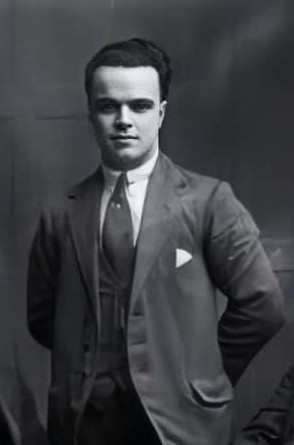
McKelvey was also a member of the Supreme Council of the Irish Republican Brotherhood
A third extended IRB meeting took place on 19 April, with McKelvey again in attendance. On the suggestion of O’Donoghue, a committee of six was formed, three pro- and three anti-Treaty, to see if a basis could be found for uniting the IRA. For the pro-Treaty side, Diarmuid O’Hegarty, Martin Conlon and Seán Ó Muirthile were selected – all political figures; the anti-Treaty members were O’Donoghue himself, McKelvey and Lynch – all IRA figures.32
Ó Muirthile later provided a detailed account of the committee’s discussions. They met for the first time later that day and Lynch immediately presented a number of “minimum demands,” among which were: “1. To maintain the existing Republic. 2. That Dáil Éireann as the Government of the Republic shall be the only government in the country. 3. To maintain the Army as the Irish Republican Army under the control of an elected independent Executive.” The first and third points were simple re-statements of the anti-Treaty IRA’s existing position, but the second point would inevitably be controversial as it effectively demanded the dissolution of the Provisional Government which had been set up under the terms of the Treaty on 16 January.33
However, after four hours of negotiations, they arrived at a compromise position which emphasised the centrality of the new Irish Constitution, but which also noted the impossibility of a secret organisation making a public statement:
“We are of the opinion that if a Constitution which is acceptable to both political parties can be drafted unity in the Army may be possible. That any recurrence of hostile action will render this possibility more remote.
That a statement that parties of both sides had met and discussed the possibilities of unification in the Army would tend to ease the situation, and that as this body is not in a position to disclose its existence, permission be given for the holding of a meeting which can make such a statement …
That we urge that the Constitution be speeded up as much as possible.”34
They agreed on a further set of concrete military proposals which each side would bring back to their respective leaderships for approval:
“1. All shootings to cease.
2. Posts at present occupied by either side shall not be attacked.
3. No further posts or buildings to be occupied by either side.
4. Barracks taken over from the enemy to be occupied by local units irrespective of which side they give allegiance to.
5. Commandeering of cars to cease.
6. Belfast Boycott to continue.”35
Collins was pleased when Ó Muirthile reported the progress to date, but when the committee reconvened the following morning, Ó Muirthile found that the anti-Treaty side had decided to up the ante:
“When we went to the Clarence Hotel the next morning the same members were present, but it became clear at once that we were to face new arguments and new proposals. Those who had been consulted by the other side overnight included Rory O’Connor, who thought that because of our willingness to resume they had our side, so to speak, ‘on the run,’ and that they could harden their attitude to us. Joe McKelvey stated that he had brought the matter of the negotiations before ‘the Army Council’ meaning the Council then in occupation of the Four Courts, and that their opinion was that if negotiations were to continue they should now be conducted by ‘the Army Council’ and ‘Officers of the Army,’ meaning those in charge of the government forces, who could speak with authority on the other side.”36
In short, McKelvey wanted to negotiate with the organ-grinders, not the monkeys – he specifically named Mulcahy as one who he thought should be representing the pro-Treaty side. Ó Muirthile insisted that their side had full authority to negotiate, but “They would not agree and we adjourned without getting any further … Negotiations ended and the words that might cause shootings to cease and thereby save the lives of many were not spoken.”37
While Ó Muirthile’s account gives the impression that this was the last such meeting, it was not. According to O’Donoghue, the focus now shifted to the new constitution:
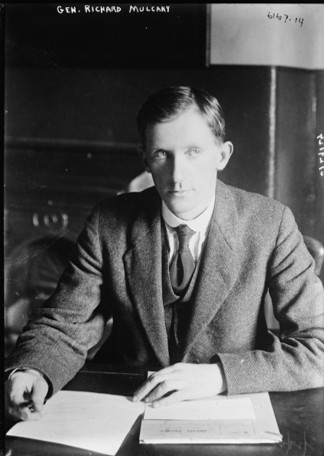
McKelvey wanted to negotiate directly with Richard Mulcahy, the Minister of Defence (Library of Congress)
“At the next meeting the pro-Treaty representatives expressed the opinion of their authorities that a meeting of the prominent officers on both sides would not serve any useful purpose until the constitution was available … To this Liam Lynch rejoined that without guarantees he could not wait a fortnight for a new constitution … The Republic would have to be maintained and the Free State would not be allowed to come into existence, no matter what sacrifice may be necessary to prevent it. On that note, this particular effort ended.”38
A split within the split
After the failure of the IRB talks, tensions continued to mount and there were armed clashes in Kilkenny on 2-3 May with National Army troops eventually forcing the surrender of Executive forces who had occupied prominent buildings; then, four National Army soldiers were killed in a gun battle between the two factions on 4 May in Newtowncunningham, Co. Donegal.
Mellows and Seán MacEoin, representing the two sides, agreed a ceasefire the same day. This provided breathing space for further, but fruitless, efforts to find a basis for army unification – a committee of ten TDs met under the auspices of the Dáil but could not come to an agreement.
A separate committee of senior officers, including Collins, Mulcahy and O’Duffy, as well as several members of the Executive (although not McKelvey), seemed to be edging towards a compromise but became stuck on the issue of who would be the Chief of Staff of a reunited IRA, Lynch or O’Duffy. Those talks continued until mid-June, by which stage the majority of the Executive – but not Lynch – had had enough and voted to break off further negotiations.
On 16 June, the same day on which a general election to elect TDs for a Third Dáil was held, “… the proposed new Free State constitution was published in the newspapers. Due to pressure from the British cabinet, it contained little of a republican character that would appease the anti-Treaty side and maintained the controversial oath of allegiance.”39
A third Army Convention held two days later proved to be the most controversial of the series, as Tom Barry had come up with a radical new plan for how IRA unity might be achieved.
While the Convention was discussing the army unity negotiations that had taken place to date, Barry put forward a motion to resume the war against the British troops still left in Dublin but more importantly, also against those in the north – “Barry’s thinking, shared by much of the republican leadership (though not Lynch), was that a renewed war with Britain would bring unity to both sections of the IRA.”40
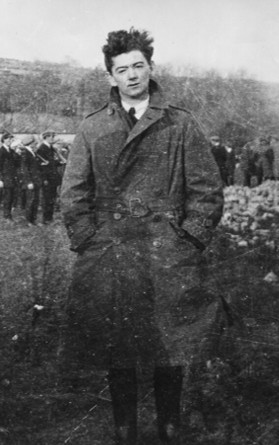
At the third Army Convention, Tom Barry put forward a proposal to resume the war against the British
Lynch voted against the motion, but Barry was supported by McKelvey, O’Connor, Mellows, O’Malley and other members of the Executive; however, the motion was defeated by 118 votes to 103. The outvoted faction promptly walked out and returned to the Four Courts, from which Lynch was then barred. According to O’Malley, “Joe McKelvey was elected Chief of Staff by the members of the Executive who were in favour of war.” McKelvey was now the official leader of the anti-Treaty IRA, but that faction was itself divided.41
In the days that followed, Lynch and his officers stayed in the Clarence Hotel, across the River Liffey from the Four Courts. The ban on the former Chief of Staff was eventually lifted: “Lynch and the officers of the 1st Southern Division attended meetings at the Courts, but the duties of Chief of Staff were carried out by MacKelvie [sic].”42
On 22 June, Field Marshall Henry Wilson, former Chief of the Imperial General Staff and one-time Military Advisor to the Government of Northern Ireland, was killed by the IRA outside his home in London. The British government attributed responsibility for the killing to the Four Courts garrison and insisted that either Collins take action against them or they would. A few days later, the Provisional Government found a pretext for doing so.
As part of the Executive’s ongoing efforts to implement the Belfast Boycott, on 26 June, Leo Henderson led a party to the Baggot Street garage of Fergusons, a Belfast-based car business. National Army troops arrived and arrested Henderson and his men. Later that night, in retaliation, O’Malley and others kidnapped the National Army’s Deputy Chief of Staff, J.J. “Ginger” O’Connell and imprisoned him in the Four Courts.
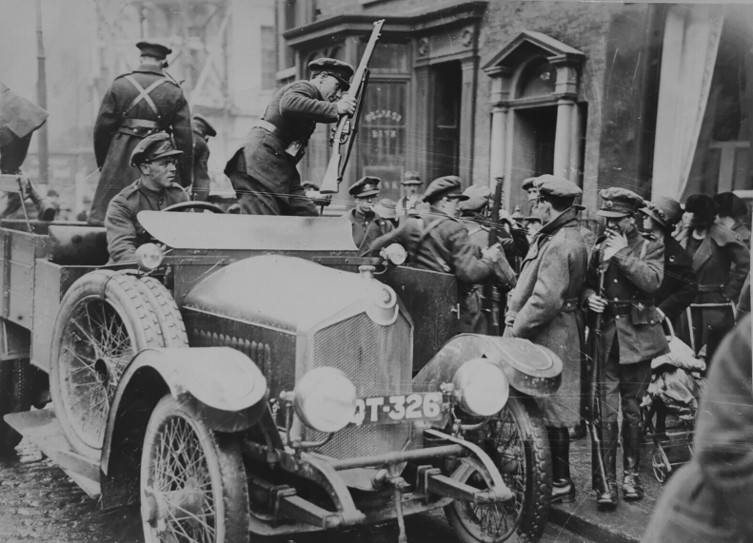
National Army troops arrive in Baggot Street, Dublin, to arrest an anti-Treaty IRA party who had raided Ferguson’s Garage (Irish Examiner, 12 April 2022)
Rumours began to circulate of an imminent attack on the Four Courts, but McKelvey adopted a cautious approach: “‘We must not fire a shot or give any provocation,’ said McKelvey.’ ‘You mean,’ said Mellows, ‘that members of the Executive will not resist arrest if attacked outside the Courts in the next few hours?’ ‘Yes,’ said McKelvey.”43
Belated attempts were made to improve the defences of the Four Courts:
“Trenches were dug inside the heavy gates to prevent armoured cars moving in from outside. Our engineers brought out mines and began to dig up the paved blocks of the street near the Liffey. Stater armoured cars drove up; men got out of them and cut the wires connecting the mines to the batteries inside. Our men stood there helplessly as they had been instructed not to fire under any circumstances.”44
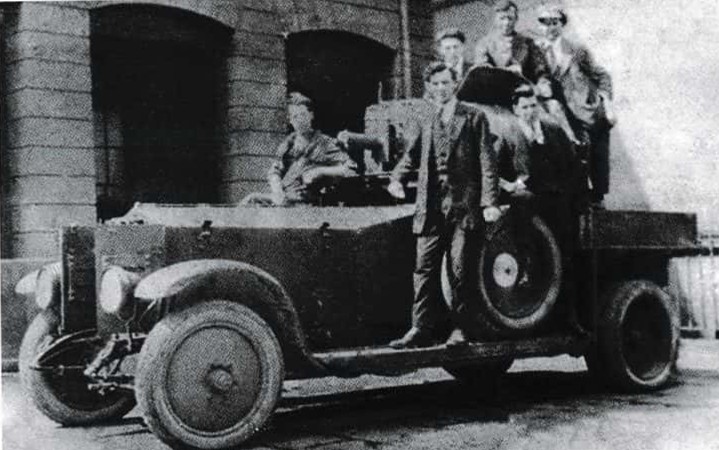
Members of the Four Courts garrison pose with their sole armoured car, The Mutineer (www.comeheretome.com blog)
At another meeting in the Four Courts the following night, the rift among the Executive appeared to be almost healed and Lynch was on the verge of resuming his position as Chief of Staff. After the meeting, he returned to the Clarence Hotel.45
O’Malley said, “Rory and Joe McKelvey began to draft a ‘Proclamation to the Citizens of Dublin.’” This document was smuggled out past the National Army cordon, printed and pasted up across Dublin as a “Proclamation to Fellow Citizens of the Irish Republic.” Significantly, it appeared over the names of all the members of the Executive, including Lynch and his supporters.46
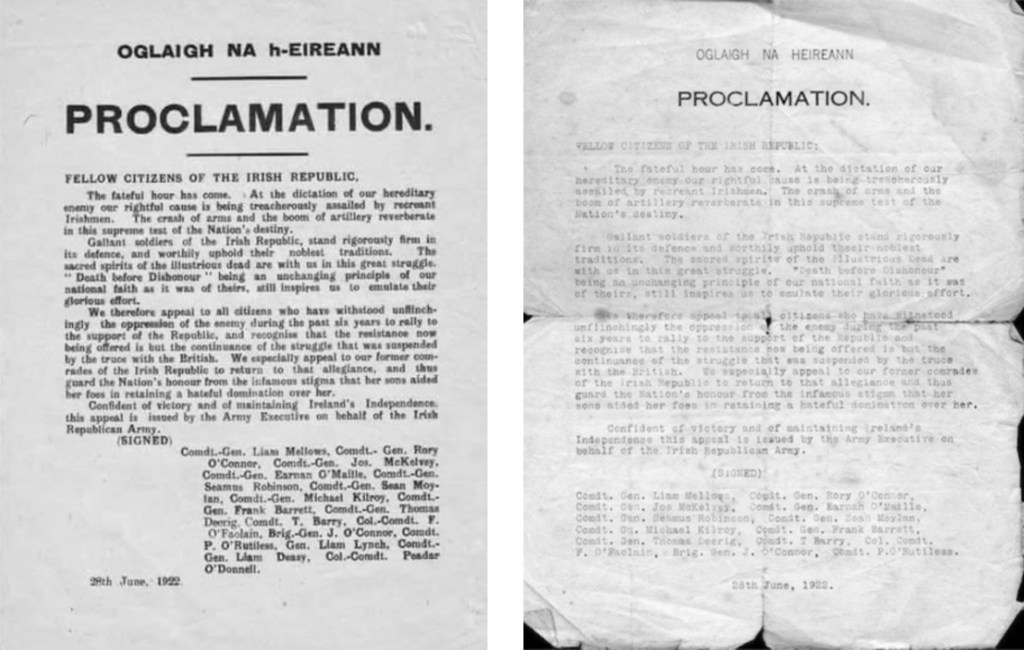
L: Proclamation to Fellow Citizens of the Irish Republic, possibly co-authored by McKelvey; R: the typewritten manuscript (Whyte’s Auctioneers)
But at 3:40am on the morning of 28 June, an ultimatum was presented to the Four Courts garrison, demanding the surrender of the building by 4am. Seven minutes after the deadline expired, National Army troops using borrowed British artillery opened fire. The Civil War had begun.47
Part 2 of this post will trace McKelvey’s final months.
References
1 Memoir, undated, Frank Aiken Papers, UCD Archive (UCDA), P104/1308.
2 Tom McNally interview with Ernie O’Malley in Síobhra Aiken, Fearghal Mac Bhloscaidh, Liam Ó Duibhir & Diarmaid Ó Tuama (eds), The Men Will Talk to Me: Ernie O’Malley’s Interviews with the Northern Divisions (Newbridge, Merrion Press, 2018), p109.
3 Military Archives (MA), Bureau of Military History (BMH), WS0636 Denis McCullough.
4 Typewritten memo, untitled and undated, Denis McCullough Papers, National Library of Ireland (NLI), Ms 31,653. The memo is annotated in McCullough’s handwriting, stating that it is a copy of the document agreed by him, McKelvey, Woods and Crummey which was given to Collins and Griffith at the meeting in the Gresham Hotel. Clause 2 has an addendum in handwriting other than McCullough’s which states: “Also military protection.”
5 MA, BMH, WS0636 Denis McCullough.
6 Roger McCorley interview with Ernie O’Malley in Aiken et al, The Men Will Talk to Me, p100.
7 Statement of Mr Denis McCullough, n.d., McCullough Papers, NLI, Ms 31,653.
8 Florence O’Donoghue, No Other Law, (Dublin, Anvil Books, 1986), p209. O’Donoghue was Intelligence Officer of the 1st Southern Division during the War of Independence.
9 Appendix A to report of Minister of Defence to Dáil, 26 April 1922, https://www.oireachtas.ie/en/debates/debate/dail/1922-04-26/10/; O’Donoghue, No Other Law, p209. Charlie Daly, O/C of 2nd Northern Division, also opposed the Treaty but did not sign the letter as his division was divided on the issue – see Fearghal Mac Bhloscaidh, ‘Charlie Daly: Republican Brothers, Partition & the “sham” northern offensive,’ in Irish Historical Studies, Vol. 49 Issue 175 (May 2025), pp89-109.
10 O’Donoghue, No Other Law, p217.
11 Ernie O’Malley, The Singing Flame (Dublin, Anvil Books, 1978), p63.
12 MA, BMH, WS0389 Roger McCorley; Public Record Office of Northern Ireland, HA/32/1/130 Documents on IRA activities seized at St Mary’s Hall, Belfast, by RUC.
13 O/C 3rd Northern Division to Chief of Staff, 27 July 1922, UCDA, Richard Mulcahy Papers, P7/B/77.
14 MA, Military Service Pensions Collection (MSPC), 24SP11139 Séamus Woods.
15 Jim McDermott, Northern Divisions: The Old IRA and the Belfast Pogroms 1920-22 (Belfast, Beyond the Pale Publications, 2001), pp189-190.
16 O’Donoghue, No Other Law, p224.
17 Ibid.
18 O’Malley, Singing Flame, p77.
19 MA, BMH, WS0389 Roger McCorley.
20 Interview with Advisory Committee, 24 April 1937, MA, MSPC, MSP34REF07497 Patrick Thornbury.
21 Patrick Thornbury to Military Service Pensions Board, 24 April 1937, MA, MSPC, MSP34REF07497 Patrick Thornbury.
22 William Ward to Michael Carolan, 22 May 1935, MA, MSPC, MSP34REF20261 Michael Carolan.
23 Gerard Shannon, Liam Lynch: To Declare a Republic (Newbridge, Merrion Press, 2023), p177.
24 Rory O’Connor to Poblacht na hEireann War News No. 50, 31 August 1922, https://digital.ucd.ie/view-media/ucdlib:265004/canvas/ucdlib:265427.
25 John O’Beirne-Ranelagh, ‘The IRB from the Treaty to 1924,’ in Irish Historical Studies, Vol. 20 Issue 77 (March 1976), pp89-109.
26 IRB Supreme Council, Constitution of the Irish Republican Brotherhood as revised to date, 1920, NLI, Ms 27,628.
27 O’Donoghue, No Other Law, p190.
28 Leon Ó Broin, Revolutionary Underground: The Story of the Irish Republican Brotherhood, 1858-1924 (Dublin, Gill & MacMillan, 1976), p196; Mac Bhloscaidh, ‘Charlie Daly.’
29 IRB Supreme Council, The Organisation and the New Political Situation in Ireland, 12 January 1922, NLI, Ms 27,628.
30 O’Donoghue, No Other Law, p233.
31 Notes from Michael Collins diary, 18 March 1922, UCDA, Mulcahy Papers, P7/a/62.
32 O’Donoghue, No Other Law, p235.
33 Statement of Seán Ó Muirthile to Army Inquiry Committee, April 1924, UCDA, Mulcahy Papers, P7/C/13, p191.
34 Ibid.
35 Ibid., p192.
36 Ibid., p193. It should be noted that these negotiations were supposed to be happening under the auspices of the IRB, but O’Connor had left that organisation after the Easter Rising.
37 Ibid.
38 O’Donoghue, No Other Law, p236.
39 Shannon, Liam Lynch, p183-184.
40 Ibid., p185.
41 O’Malley, Singing Flame, p83.
42 MA, BMH, WS0544 Joseph O’Connor.
43 O’Malley, Singing Flame, p91.
44 Ibid., p92.
45 Shannon, Liam Lynch, p189.
46 O’Malley, Singing Flame, p94. Other accounts attribute the proclamation to Lynch – see Shannon, Liam Lynch, p310 n10. Liz Gillis supports the view that the document drafted by McKelvey and O’Connor formed the basis for the poster – see her The Fall of Dublin (Cork, Mercier, 2011), p45. However, there is an anomaly: the document refers to “the boom of artillery,” but in the sequence of events laid out by O’Malley, the document was drafted before the attack on the Four Courts began; either O’Malley’s memory was slightly mistaken, as he was writing decades later, or it was drafted after the attack began and not necessarily by McKelvey and O’Connor.
47 John Dorney, The Civil War in Dublin (Newbridge, Merrion Press, 2017), p69.


Leave a comment